Being Human
Mental health support app for emotional overwhelm and task paralysis
Role
UI / UX / Styleguide
timeline
September 2025 – February 2026

The challenge
Contemporary humans carry simultaneous loads: external tasks, demands, internal ideals and anxieties. The mind appraises this as low control with scarce resources, initiating stress arousal. Working memory saturates, attention fragments, and decisions stall. The seemingly economical—yet costly—strategy is freeze (Stillstand). Stalling breeds unfinished tasks, which inflate demands and self-blame, amplifying inner noise. Over time, repeated freeze–avoid cycles depress self-efficacy and consolidate into learned helplessness. In short: a demand–resource mismatch moves through anxiety and confusion toward stasis and, eventually, helplessness.
This project focuses on designing a user interface that provides mental health support for individuals experiencing mild emotional distress. The system is not intended for clinical diagnosis or therapy but rather for early-stage prevention and emotional regulation — offering comfort, reflection, and guidance through accessible design.





The process
Lowering the cost of starting
The research pointed to one need — gentle, step-by-step support that lowers the cost of starting. Being Human is built for early regulation, not diagnosis: it meets people in the "grey zone," before stress hardens into avoidance.
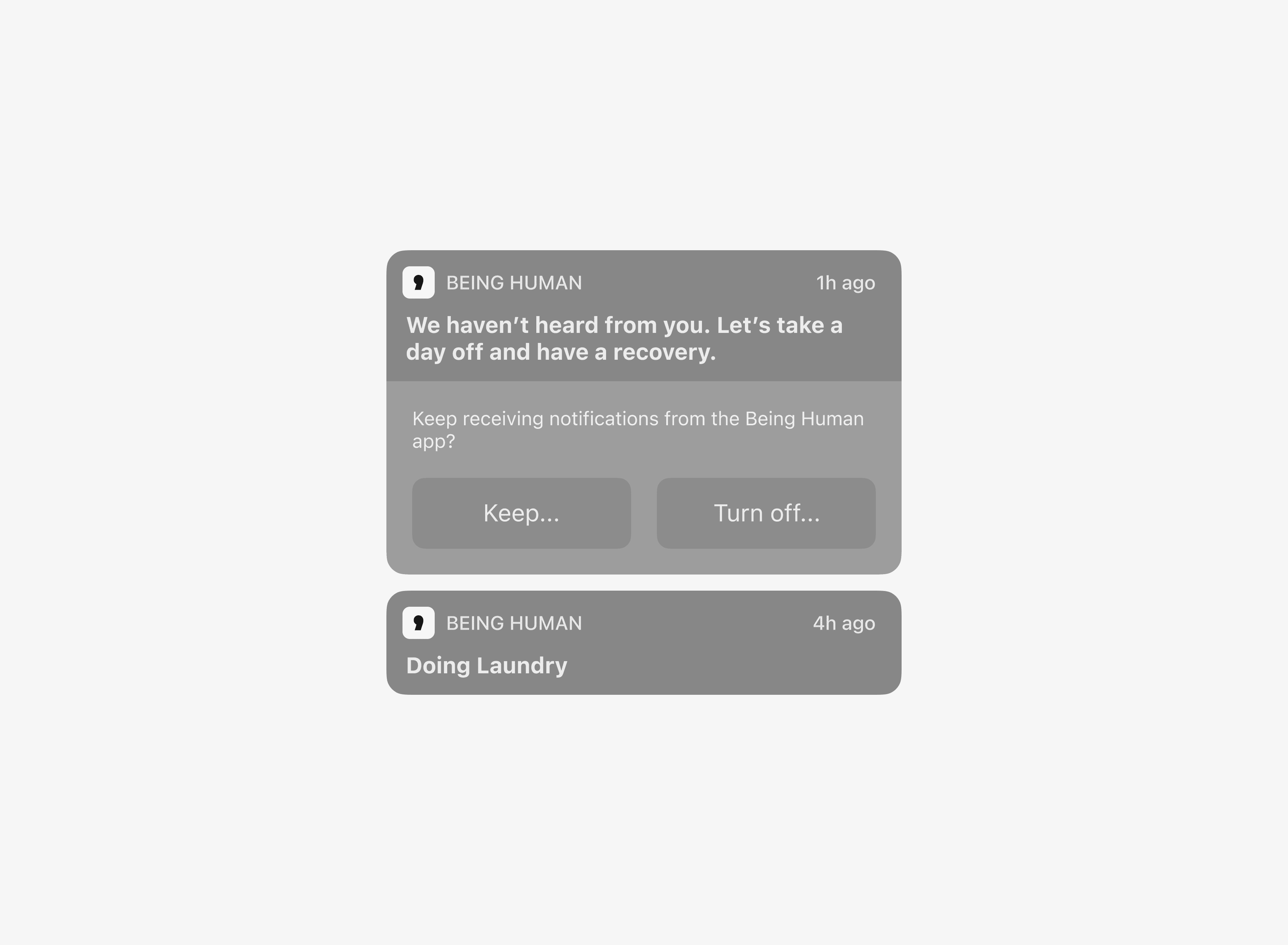
So the design ties feeling to doing. A quick mood check feeds a Balance step that turns focus into a small, prioritised task list; large tasks break into micro-steps; and the system stays forgiving throughout — pause, snooze, shuffle, or take a recovery break, with every finished task ending on a moment of rest.


The concept
Being Human is built around one metaphor: the comma, not the full stop. It reframes the moment of feeling stuck not as failure, but as a natural pause — a breath before the next small step. As a non-clinical, empathy-first companion for people in the mental-health "grey zone," it replaces the sterile feel of typical productivity tools with the warmth of a sun-inspired, soft-orange palette, and turns overwhelm into momentum through a balanced triad: breaking demands into manageable micro-steps (Tasks), cutting through the noise to focus on what matters now (Balance), and building rest into the flow as a productive act rather than a reward (Pause).

Mood check
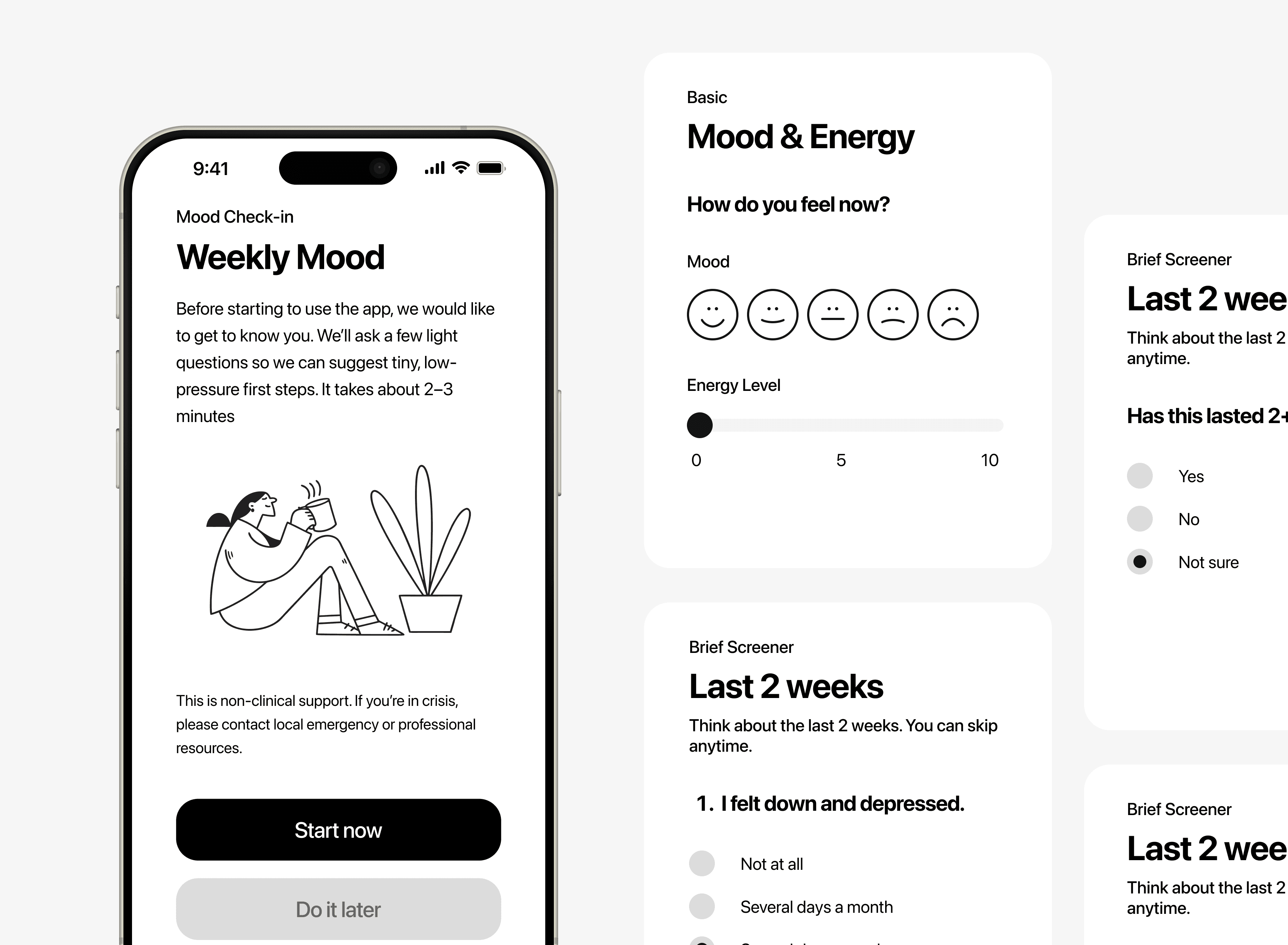
The first task is a quick, low-pressure mood check. A few light questions on mood and energy take two to three minutes, and the logo icon changes colour based on the result — reflecting how you feel back to you.


During the onboarding process, the app assesses the user's mood, lifestyle patterns, nudge preferences, and preferred pause times. This data is used to calibrate the app settings, creating a personalized environment tailored to the user's specific needs.



We often believe we have to keep climbing mountains or chasing grand dreams. But sometimes the greatest victory is simply reaching the end of the day without breaking. Building Being Human reminded me that care doesn't need to be loud or ambitious — that there's a quiet strength in pausing, in taking small steps, in just making it through. If one thing stays with me from this project, it's that the gentlest goals are often the ones most worth designing for.

